I build tooling for my game: headless Blender exporters, an Unreal import plugin, the validation that rejects a bad asset before it reaches the engine. I write it with Claude Code, and the model writes a lot of the code. The reason the tools are reliable is not the model. It is the loop I put around it.
The work AI is good at here
Pipeline tooling is repetitive, well specified, and testable. That is the sweet spot for an agent. A normal-map channel flip, a scale check, a folder contract between two programs: each one has a right answer you can write down and verify.
The creative work stays with me. The agent does not design the asset or make the look calls. It builds the plumbing that moves an asset from a script in Blender to a correct prop in Unreal, the same way every time. That split is the whole point. Automate the setup and the checks, keep the judgment.
Align before any code gets written
Most of the bad output I have seen from an AI agent came from misalignment rather than bad code. The agent built the wrong thing correctly.
So I do not start with code. I start with a short interview, one question at a time, until the agent and I are describing the same tool. Then a one page spec: the inputs, the output, the edge cases, what done means. Ten minutes of this removes most of the rework.
Build in vertical slices, test first
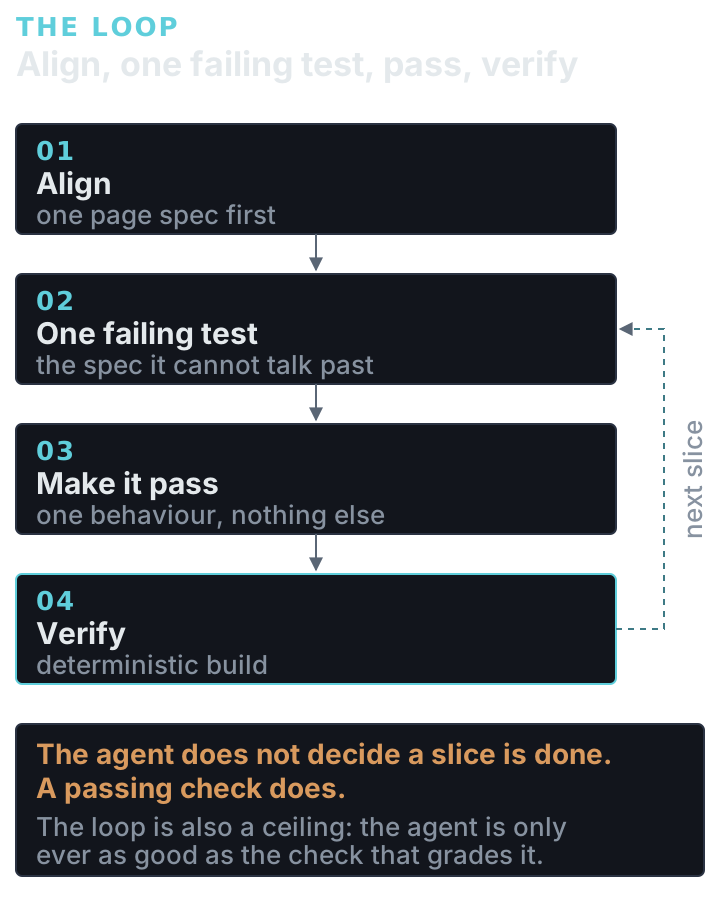
I never ask for the whole tool at once. One behaviour, one failing test, one implementation, then repeat.
Take the importer’s normal-map fix. Blender writes normals in OpenGL convention, Unreal reads DirectX, so the green channel has to invert or every surface lights wrong. The slice is small: write a test that asserts the green channel flips, watch it fail, then make it pass. Nothing else.
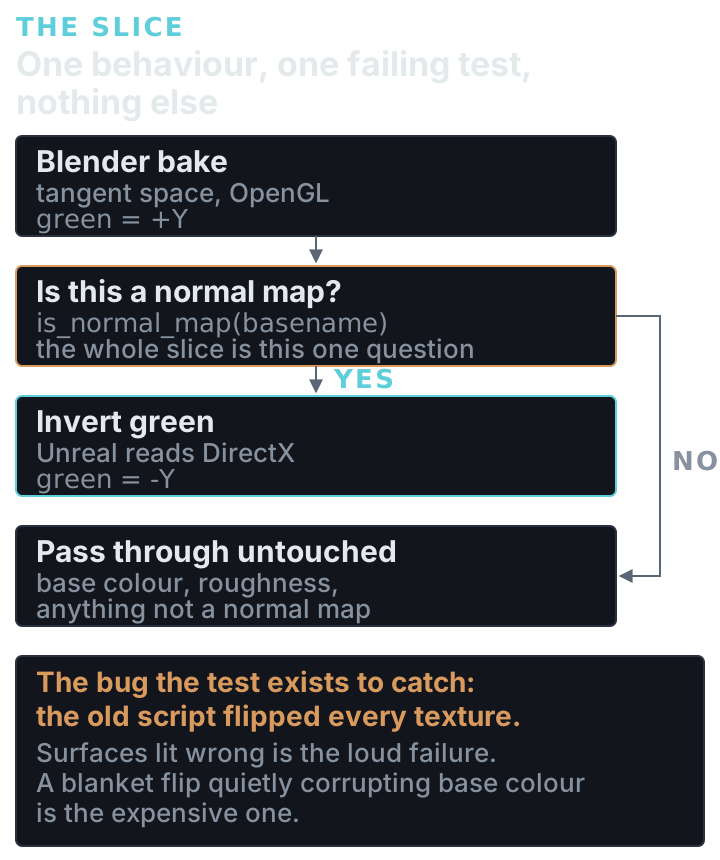
Working test-first is what stops an agent from handing back a wall of plausible code that does not actually run. The test is the spec the agent cannot talk its way around.
Note what the slice is. It is one question, is_normal_map, with a right answer on both branches, rather than the whole of “fix normal maps”. The earlier version of this code flipped every texture it touched, which looks fine on a normal map and quietly wrecks a base colour map. A slice small enough to test is also small enough to be wrong in only one way.
Keep the build deterministic
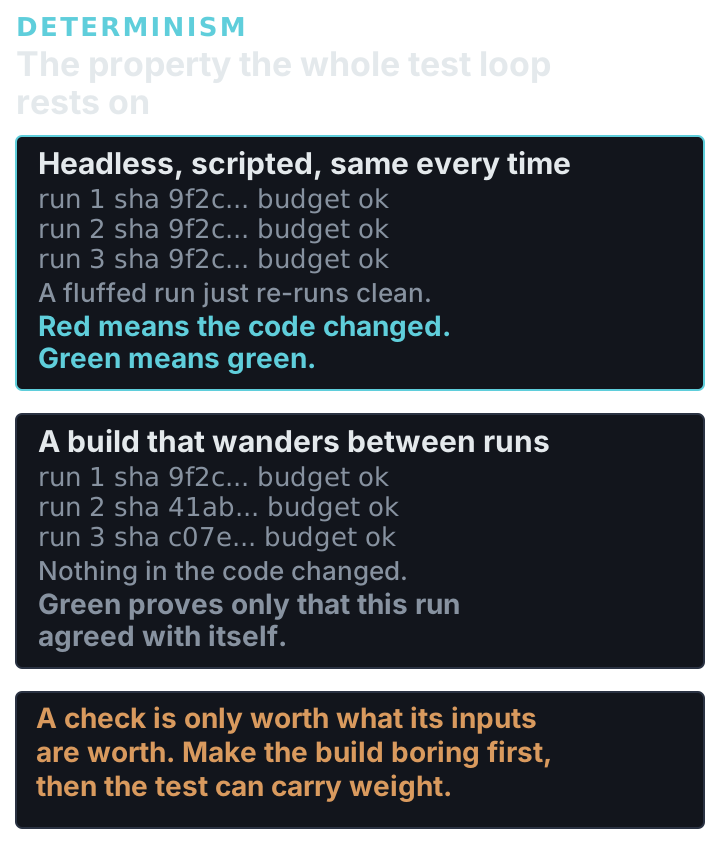
The Blender side is headless and scripted. Same input, same output, no clicking. Before anything is written to disk, a validation step checks the triangle budget, the dimensions, and that the scale is a clean 1, 1, 1. A fluffed run just re-runs clean.
Determinism is what makes the test loop trustworthy. If the build wandered between runs, a passing test would prove nothing. Because it does not, green means green.
Nothing ships done without evidence
The rule I hold hardest: the agent does not get to decide a task is finished. A passing check does. “It looks correct” is exactly what ships the regression. The build runs, the test passes, I see the output, and only then is the slice done.
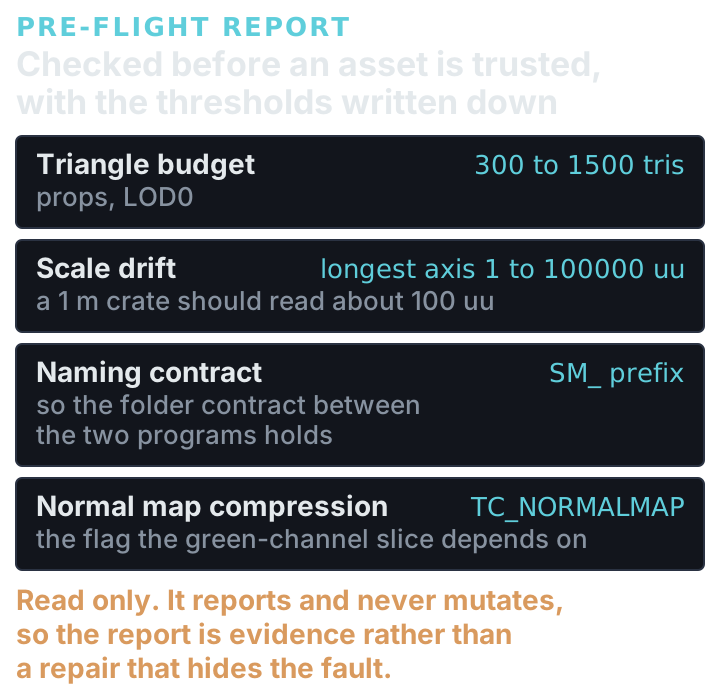
The thresholds are written down, so the check has an answer it can be wrong about. A validator with no numbers in it is a comment.
That sounds strict for solo work. It is the reason I can lean on these tools instead of babysitting them.
What I learned
A capable agent with no feedback loop produces fast, confident, broken work. The same agent inside a loop of align, test, then verify produces tooling I trust in the pipeline.
The loop is also a ceiling. The agent is only ever as good as the check that grades it, so most of my effort goes into making the check sharp, not into prompting. Pointed at the agent’s own steering rather than its code, the same question is the skill decay probe entry.
This is where the tooling layer is heading. Unreal 5.8 shipped an experimental MCP server that lets an agent drive the editor directly. The teams that get value from that will be the ones whose checks are sharp enough to grade what the agent produces. That is the part I work on.
Code is at github.com/marko-builds. The plugin this post describes is public in BlenderBridge; the validator with those thresholds is validate.py and the flip is one line in importer.py.